During the time I have been writing this blog I have been wondering exactly what it is that makes me do the things I do, and have the ideas that I tend to have. A thought occurred to me, maybe it's in my genes. I decided to do some family research and see what sorts of things my ancestors did in their day-to-day lives. Here are some of my family members who I thought really did some interesting or impressive things in order to get by.
 |
Nancy McCurdy Koyle Woodward
(seated) |
Nancy McCurdy Koyle Woodward - 5th Great Grandmother
A Mormon pioneer. Nancy joined the church shortly after her 18th birthday and left her family and friends behind to join up with the saints in Nauvoo. While living in Nauvoo she married Hyrum Koyle (my 5th Great Grandfather) and they had 2 children. Hyrum was killed suddenly, and eventually Nancy took another husband. James Woodward. The two had 3 sons, only one of which survived, during the time that they were moving to Utah. Upon arriving in Utah, Nancy did a great deal to see to it that her family was taken care of. In her biography, written by a granddaughter and grandson, it is declared that "Necessity is the mother of invention" and some of the creative things that Nancy did to support her family are listed there as well. "She washed, carded and spun wool and made it into clothing. She dyed the cloth with dye made from leaves. She gathered salaratus to make soap. For brooms she used rabbit brush. Sand and wood ashes were used to scour floors and utensils. She made syrup from sheet corn stalks and molasses from red beets. She dried corn, squash and fish for winter use. She raised sugarcane from which molasses was made and with which the fruit was preserved. She dried fruit to be cooked in winter. She gathered and dried ground cherries and sarvice berries. She made rugs from bits left from clothing. She made quilts and quilted them for herself and others. Pillows were made from feathers of wild duck and geese. She ground corn and wheat in hand mills for flour and mush."

Adelinda Hillman Koyle - 4th Great Grandmother
A Mormon pioneer. Was widowed when her husband, John Hyrum Koyle, was killed in a rockslide and had to find a way to care for her children. She gathered salaratus from Salt Creek, now known as Nephi, and used it for salt. She
dried fruit to use in winter and to sell. She made tallow candles, made starch out of
potatoes, and cleaned her floor with sand. She used wood ashes as a water softener to
wash clothes.


Edward and Ann Morris Creer - 4th Great Grandparents
Mormon pioneers. While living in England, Ann was an apprentice in the silk and lace making trade, and then worked as a glazier, designing dishes. After their betrothal both Edward and Ann worked at a lace factory, he being employed as a spinner, and she as a weaver. Once they had arrived in America, they stopped in St Louis to earn the funds necessary to complete their trek. Edward worked in the coal fields there, digging coal, and his sons William and Orson hauled it to market. Along with her on the overland journey, Ann brought a large brown medicine chest. The leader of the company had ordered that anything that could be spared be left behind. Ann insisted on keeping the medicine chest, and with it, and a good working knowledge of herbal remedies, went on to save the lives of several members of their party. After they settled in Utah Edward built canals and wagon roads, and worked in a rock quarry which supplied stone for the Salt Lake temple. He helped in constructing the Provo Woolen Mills and worked there for 12 years.


William Arnold and Agnes Ann Callahan Rose - 4th Great Grandparents
Mormon pioneers. William came to Utah with his parents and grandparents and arrived in Salt Lake City in 1850. He was a very good marksman, and, while living in Tintac, was often called upon by both the local miners and the local Indians, whose chief he and Agnes knew well, to keep the peace in the rough and tumble mining community. Although he didn't care much for farming or working with his hands, William hunted, broke wild horses, and panned for gold. He operated a mining claim for a time, until a territorial dispute nearly caused an all-out war. William also worked as a freighter for a number of years, and, therefore, was not home much between that, the mining, and keeping law and order for the miners and the Indians. Once while returning from a freighting trip he came upon an Indian baby whose family had been killed. He cared for the infant and brought it home. Agnes nursed the baby along with her own, until a family friend offered to take the child in. Agnes came to Utah with her parents in the Brigham Young Company. Although there is not much information to be found about Agnes, she must have been an extraordinary woman to have cared for a family of 15 children largely on her own. A story recounted by one of her daughters-in-law says that one day, while William was away, Agnes was standing at the stove cooking gravy. An Indian wearing nothing but a loincloth came in, pushed her out of the way and began stirring the gravy. Agnes was very frightened, as she could tell that he had been drinking, and there were several small children at the house with her. She took up a long Indian bow and struck him across his bare back, causing him to howl in pain and make a hasty escape, running out the door and through a cornfield. Later on the Indian chief told Agnes she was a "brave squaw" because the man she had struck was a "heap bad Indian." She died giving birth to her last child, a daughter named Olive.

Daniel Graves - 4th Great Grandfather
A Mormon pioneer. Daniel was born in England, where he met, married and started a family with Mary Newman (His second wife. His first wife, Elizabeth, passed away two years prior to his marrying Mary. They had two children that survived to adulthood.) After joining the church, he and Mary set out for Utah. The family arrived in Salt Lake City in 1855. Shortly after their arrival they moved to Provo. Daniel was a school teacher, but had a great interest in agriculture. He soon became involved in many agricultural organizations. He was among the first in Utah to begin raising silkworms, and eventually wrote an instructional book on the topic. He also grew grape vines, and walnut trees. He took wood from his walnut trees and had beautiful caskets made for himself and his wife. He had one of the first dance halls in Provo. Daniel was also a very talented artist. He could paint, had excellent penmanship, and did sketches with pen and ink. He won a medal at the 1851 World's Fair in London for an ink and pen sketch entitled "Life of Christ."

William Creer - 3rd Great Grandfather
A Mormon Pioneer.William was born in England, and his only opportunity to get an education was at age 8, and even then he only received 8 weeks of schooling. The remainder of his childhood in England was spent working in a cotton mill. He immigrated with his parents, Ann and Edward, and while they were working in St. Louis to raise funds to continue to Utah, William worked in the coal fields. The family moved to Spanish Fork, and William married Sarah Jane Miller Bradley. William homesteaded a large acreage in Lake Shore, and ran many farms in the area. He was involved in the theater, and joined the Spanish Fork Choir. He fought in the Black Hawk war, and after it had concluded William purchased a set of law books using money he had earned while working on the railroad. Despite having only had 8 weeks of formal education, he passed the Bar Exam in 1877. With his new education William became more involved in civic duties, an left his land and farms to his sons. He served as a school board trustee, and was on the committee that drafted the constitution for the Spanish Fork Co-Op, for which he served as director for 8 years. He served two terms as Spanish Fork's City Attorney and one term as Mayor. In 1884 he was elected to the Utah House of Representatives. He was one of the first men in Utah to take a stand for women's sufferage.


Sarah Slusser Nisonger - 3rd Great Grandmother
A Mormon pioneer. As a child she lived on a farm in Ohio where they raised cows, chickens and horses. They grew apples and popcorn which they enjoyed during the winter, along with nuts collected from the surrounding woods. While saving money for their journey west, Sarah worked in a shirt factory until Henry was able to find work. Once he had found work as a woodcutter, she took to cooking for the men in his crew. As they went west to Utah, Sarah brought with her across the plains a large spinning wheel. Once in Utah, she washed clothes for the soldiers at camp Floyd and baked pies to sell. She carded wool, spun thread, and weaved cloth to clothe her family.
Lucretia Davis Gay - 3rd Great Grandmother
A Mormon pioneer. Brought with her across the plains a spinning wheel, and drove a herd of sheep to provide the wool. Spun and sewed to provide clothing for her family of eight children. After her husband, Moses, died of a sudden heart attack, she was widowed, and she used her spinning, weaving and sewing skills to barter for the necessities to care for her family. She also carded wool for the church, and sewed clothes and spun animal hair lariats for church brethren.
Mary Ann Stockdale Carter Martin - 3rd Great Grandmother
A Mormon pioneer. After her first husband was killed in a rockslide, Mary Ann did anything she could to support her children: washing, ironing, cleaning, mending, sewing and darning. After having joined the Mormon Church, she married again. Once her second husband had passed away, she decided it was time to make the journey to Utah. She and her family went by ship and train as far as they could, having started their lengthy trek in England, then bought a wagon and handcart to go the rest of the way. Upon their arrival in Utah, Mary Ann and her family sold the wagon and oxen and bought a herd of cattle to support themselves.

Charles Henry and Julia Ann Lockwood Hales - 3rd Great Grandparents
Mormon pioneers. Charles was trained as a shoe and boot maker in England. When his family came to Canada he worked as a farmer. He married Julia Ann Lockwood in Quincy, Illinois and they began moving with the saints, eventually coming to stay in Nauvoo, where Charles was employed as a brickmason, When they left Nauvoo they took with them only the necessities for their family. They settled in the Salt Lake Valley, and Charles took another wife, Francis Brunyer. Upon reaching Spanish Fork, their poverty was so great that they were often left without food to eat, and were grateful for seamless sacks to use to sew dresses and trousers. Despite their hardships, all of the 25 Hales children grew to adulthood, save little Isabella who was killed by Indians.

William Willard Smith - 3rd Great Grandfather
A Mormon pioneer. William came to Utah in 1849 with his wife, Eliza Mathis Smith. He built the first flour mill in Utah County, in Provo, in 1851. He sold the mill in 1858 and moved to Santaquin where he built the first flour mill in Santaquin. He also built a sawmill, molasses mill and shingle mill in the Santaquin Valley. He helped build part of the road leading up to Santaquin, and helped to lay out and build much of the irrigation system there as well. He and Eliza had 11 children.

William Henry Bone - 2nd Great Grandfather
A Mormon pioneer. Came to Utah from England with his wife, their children, her siblings, and mother-in-law Mary Ann. Upon their arrival in Utah they sold their wagon and oxen and purchased a herd of cattle. William, despite a crippling childhood injury, did much to support his family. He cured hides and tanned leather from the family's cattle herd. He was also an excellent shoe soler, and would go into the woods surrounding their home in order to cut sumac and oak brush to make shoe pegs. Before nails were used to fasten soles to uppers, shoe pegs were used.
 |
| Mariah Henrietta Gay and George Gillette Hales Family |
Mariah Henrietta Gay Mendenhall Hales -2nd Great Grandmother
A Mormon pioneer. Came across the plains with her father and mother, Moses and Lucretia Gay, as a child. She used her spinning, weaving, and sewing skills to clothe her children, her husband's children, and his second wife's children after she died in childbirth, 15 children in total. She also sewed for her seven brothers to help her mother.
Charles Cannon and Mary Margaret Peterson Creer - 2nd Great Grandparents
Charles' father, William was a farmer, and after civic duties began occupying his time more and more, the farm was given to Charles and his brother Joseph. Charles owned and ran several farms in and around Spanish Fork and Lake Shore, Utah. He raised cattle, and grew hay, grain and row crops. Horses, milk cows and pigs were kept at the house in Spanish Fork. He was one of the first to introduce Hereford cattle into the Utah Valley. He was known to begin work before the sun rose and finish after it had set, and rain was no excuse for a day off from chores. Charles, along with his brothers Roger and Alvin, owned and operated the Mount Nebo Canning Company, and canned local produce, including that grown on the family's farms. Mary was an excellent seamstress and sewed for all of her nine children. With six girls to sew for, it is said that her sewing machine was never closed. It was always working. Mary was a good cook, and had a tradition of cooking a goose every Christmas. She canned fruits and vegetables, and kept a tidy house. After a crippling accident, Mary was no longer able to do as much around the house, but she was an excellent manager and delegated out tasks to the children to make sure that everyone was taken care of, and the house was kept in order.

John and Pearl Maxine Graham Krebs - Great Grandparents
John and Maxine both fished quite a bit. They had gardens when they were able. They grew all the usual garden staples, as well as several varieties of radish. John made his own horseradish. He would frequently visit the local dump where he would look for useful things to take home. Maxine did a lot of crafting. She crocheted, embroidered, and made latch hook rugs. She made denim quilts by using the whole leg of the jeans, and put a thin blanket between to act as the batting. She also did a lot of cooking and canning. This is where mom got her recipe for tomato soup cake, and she made a great oil and vinegar salad, but the recipe for that is lost to time.
Ronald Soren and Beth Rose Creer - Great Grandparents
Ronald (nicknamed Bonnie) and Beth had huge gardens and an orchard for a number of years. Bonnie worked as a farmer for many years, just like his father, Charles Cannon. He saw the potential in objects and would reuse whatever he could. He would use his anvil to straighten out old nails to use them again, and used the printing plates from his youngest son's yearbook as a doghouse roof for his grandchildren's dog. He built a root cellar to store potatoes and carrots over the winter. Beth had a green thumb and grew beautiful flower gardens. She cooked, canned, and sewed a lot, and crocheted a little. She loved to go camping and fishing. Beth didn't waste, either. She would brew a pot of coffee and, after drinking a cup or two from the pot, would put the remainder in a mason jar and put it in the refrigerator for later. She carefully unwrapped gifts and packages in order to reuse the wrapping paper. Her gifts were almost always items of use, and even when she didn't have a lot of money, she set a little aside to buy gifts for her family.

David Chester and Venla Bone Nisonger - Grandparents
David and Venla had gardens whenever they could, and their children did the same. The family would get together to can the produce and share it amongst themselves. Even when space was limited, they would find something to grow. David and Venla grew berries along their walkway when I was growing up, and would freeze them to give to the grandkids when they came to visit.When their kids were young they would go out into the woods to pick berries for jam or jelly. David worked as a lumberjack for a time, along with two of his four sons. While living in Heber, Utah he and his youngest son, Mark, would go out cutting wood for the woodburning stove that heated the house. Venla sewed and crocheted. She had a large loom which she used to weave rag rugs from old clothing. She cooked and baked for her family of ten. When all ten were at home there were no leftovers to be had, but as the children left it became more commonplace. The leftovers would be frozen, or, if there was enough left over, the would be made into soup or casserole.

Ronald Deloy and Joan Krebs Creer - Grandparents
Ronald (nicknamed Oscar) worked for the Utah Department of Wildlife for a number of years. As a result he was able to take many hunting trips, and brought home many elk, deer, and pronghorn for the family. He oversaw all of the fish hatcheries in Utah, and ran several of them himself over the years. He and Joan kept huge gardens whenever possible, and kept peach trees as well. They went camping and fishing quite often. With the game meat, fish, and home-grown produce, they have always kept their freezer and pantry well stocked. Joan has always cooked and baked for the family, and canned the vegetables that they have grown, as well as the game meat. She crafts, sews and crochets a bit, too. While I was growing up she made easy tied quilts by using two flat sheets as the front and back.
Well, maybe my being drawn to crafting, cooking, farming, recycling and saving money isn't genetic, but my family was certainly well-versed in all these things. Although I can't prove that my interests came down my family tree in my genes, they have certainly reached me somehow. I invite anyone who reads this post and knows any of the family members listed herein, or any that I may not have included, and wants to share information, memories, or photos, to please share. I am always looking to learn more about the people who make up my family tree.
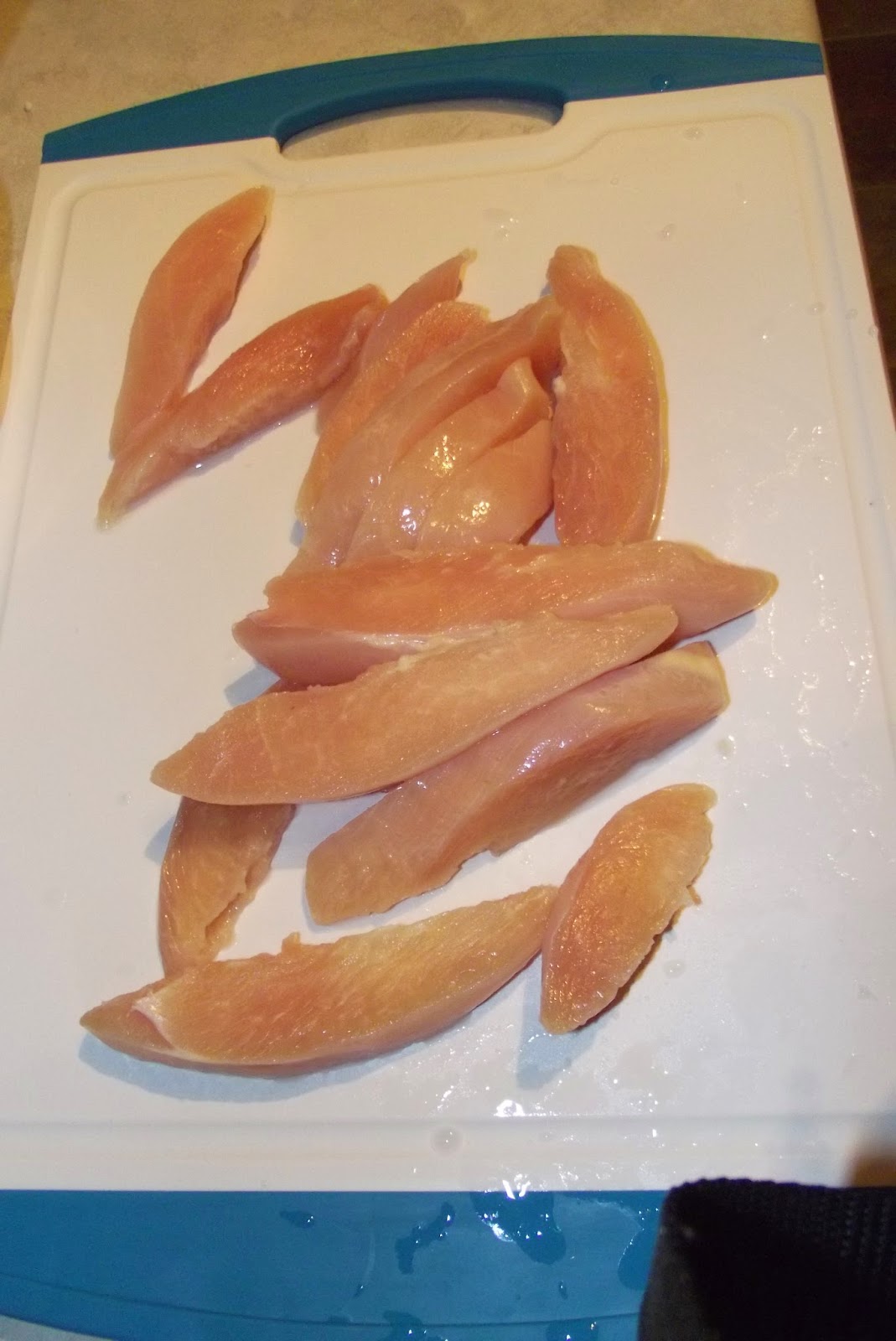
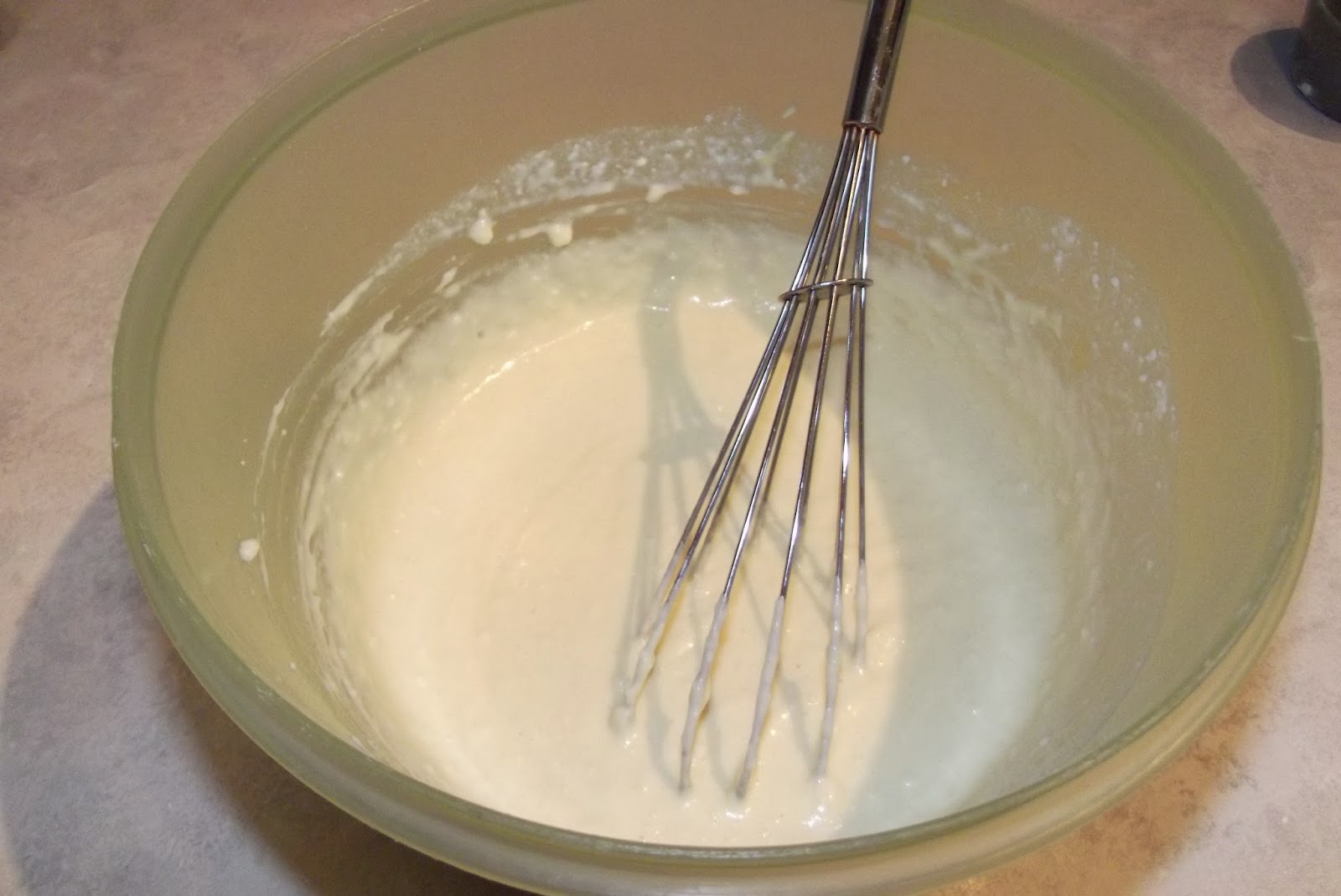
 First things first, put a baking rack on a baking sheet and place it in your oven. This will be your retrieval device. Set your oven's temperature to 200 degrees. Preheat your waffle iron, making sure that it is clean and greased. Preheat your deep fryer to 375 degrees. If you don't have a deep fryer, use a heavy-bottomed fry pan or dutch oven with enough oil that your chicken won't stick to the bottom. Remember not to use non-stick cookware for frying. Use cast iron if you've got it.